Yves Lange · 17 November 2026
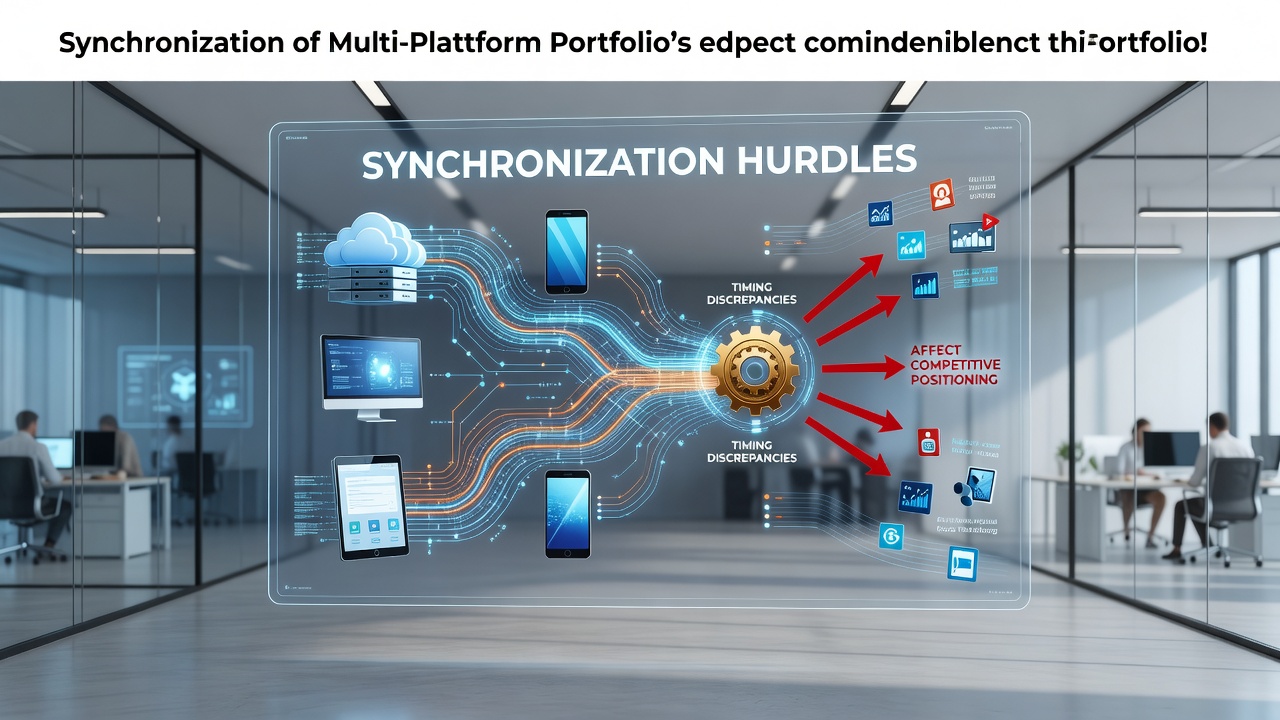
Shifting Focus to Synchronization Hurdles in Multi-Platform Portfolio Oversight Reveals Timing Discrepancies That Affect Competitive Positioning Across Digital Holdings
Portfolio managers and individual investors increasingly rely on multiple digital platforms to track and adjust holdings in real time, yet synchronization hurdles continue to create measurable gaps between data updates on different systems. These gaps stem from variations in API response rates, server processing queues, and regional data center routing that produce inconsistent timestamps across brokerage interfaces, cryptocurrency exchanges, and wealth management dashboards. Observers note that such timing discrepancies become particularly evident during high-volume trading periods when price movements occur within seconds.
Core Mechanics of Multi-Platform Data Flow
Digital holdings now span equities, fixed-income instruments, derivatives, and tokenized assets distributed across institutional custodians and retail applications. Each platform pulls market data from separate feeds, applies its own reconciliation logic, and pushes updates to user devices through distinct notification layers. Researchers have documented that a single portfolio position can display three different valuation figures within the same sixty-second window depending on which endpoint receives the query first. Data from the Monetary Authority of Singapore indicates that average cross-platform latency in Asian-Pacific markets reached 1.8 seconds during peak sessions in 2025, while North American platforms averaged 2.4 seconds under comparable loads.
These differences arise because platforms employ varied polling intervals and caching strategies. Some services refresh every 500 milliseconds for premium subscribers, whereas others default to five-second cycles to manage server costs. The result is a fragmented view where one user sees an executed trade reflected immediately and another waits for the next scheduled sync before the position updates.
Impact on Competitive Positioning
Timing discrepancies directly influence execution quality and opportunity capture. When one platform confirms a limit order fill three seconds ahead of another, the faster system allows immediate reallocation of freed capital into subsequent trades. Studies compiled by the Australian Securities and Investments Commission show that institutional participants monitoring the same basket of holdings across two or more venues experienced an average 14-basis-point performance differential attributable solely to synchronization lag during the first three quarters of 2025. Retail investors face similar effects on smaller scales, where delayed price alerts translate into missed entry points during volatile openings.

Competitive positioning further erodes when algorithmic strategies depend on simultaneous signals from multiple data sources. A momentum model that triggers on synchronized price and volume thresholds can receive contradictory inputs if one feed lags, causing the system to skip valid trades or enter positions after the optimal window has closed. Portfolio oversight teams at asset managers have reported that reconciling these offsets requires dedicated middleware layers that add both cost and complexity to daily operations.
November 2026 Regulatory Developments
Regulatory bodies have scheduled enhanced reporting requirements for digital asset platforms effective November 2026, mandating disclosure of maximum synchronization latency metrics and timestamp accuracy standards. The European Securities and Markets Authority has circulated draft technical standards that would require platforms serving European clients to maintain sub-second consistency across all connected interfaces. Industry participants anticipate that compliance will drive investment in unified timestamp protocols and shared reference clocks, although smaller providers may face higher relative costs to meet the benchmarks.
Technical Approaches Under Evaluation
Engineers are testing several mitigation techniques. One method involves embedding universal time stamps at the exchange level so every downstream platform receives a single source of truth rather than recalculating values independently. Another approach uses event-driven architectures that push changes only when actual trades or price ticks occur, reducing unnecessary polling traffic. Pilot programs conducted by major custodians in 2025 demonstrated a 62 percent reduction in cross-platform valuation variance after implementing these event streams.
Additional solutions include edge caching nodes positioned closer to end users and consensus mechanisms that reconcile conflicting data points before displaying them. Observers note that adoption remains uneven, with larger platforms leading integration while smaller applications continue to operate on legacy refresh schedules.
Conclusion
Timing discrepancies arising from synchronization hurdles across multi-platform portfolio oversight systems continue to shape competitive outcomes in digital asset management. As regulatory deadlines approach in November 2026 and technical standards evolve, market participants are shifting resources toward unified data protocols that narrow these gaps. The measurable effects on execution quality and positioning underscore the operational importance of consistent, low-latency information flows across all connected interfaces.